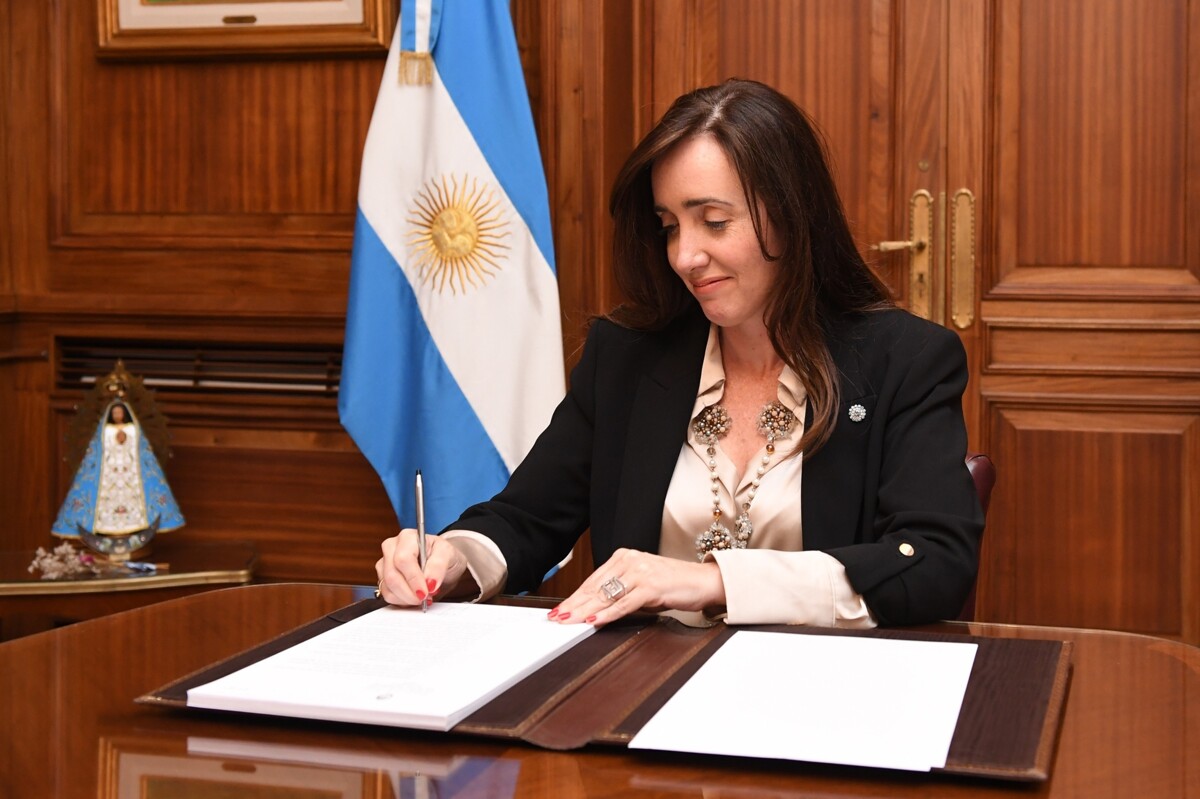
Tension between the government of Javier Milei and Vice President Victoria Villarruel escalated sharply this Wednesday in the Senate, focusing on the integration of strategic commissions and the dispute over who controls the internal board of the upper house. The ruling coalition, led by Juan Manuel Olmos, seeks to reduce the incidence of Peronism in oversight bodies and consolidate a scheme where power is more evenly distributed among libertarians, radicals, and provincial allies. In essence, what is being discussed is not just a technical redistribution, but the political control of the Senate: who defines the internal rules, who administers the commissions where the agenda is set, and what margin Vice President Villarruel will have to intervene in a year when the government intends to accelerate appointments, discipline alliances, and sustain majorities in a decisive chamber. From this, a warning has emerged that is already circulating as a political threat: if the vice president insists on questioning the redistribution, the ruling coalition will consider whether the full Senate should stop delegating to the presidency the power to appoint and integrate permanent commissions. In La Libertad Avanza, they are evaluating reversing this delegation and having the chamber itself make the decision, a move that would, in practice, cut power from Villarruel and leave her with a more ceremonial role in the chamber's operational structure. The showdown is set to intensify with the parliamentary calendar: this Wednesday, the Peronist inter-bloc is scheduled to meet to resolve its strategy regarding the distribution of seats, and on Tuesday, the 24th, the preparatory session is convened where the leadership of the Senate will be defined and the redistribution of commissions should be finalized. Within Peronism, two positions coexist: those who prefer not to join commissions to not legitimize a redistribution they consider unjust, and those, even in the minority, who seek to occupy seats to influence, access information, and dispute agendas. Behind the fight for seats looms a broader power play. However, the Convicción Federal bloc, part of the Peronist inter-bloc led by José Mayans, distanced itself from that strategy and proceeded with its own appointments: in addition to Mendoza in Acuerdos, it sent the Catamarcan Guillermo Andrada to the Foreign Relations and Worship commission. In the Senate hallways, the most sensitive point was not just the names of the appointees, but the method: Vice President Villarruel refused to sign the integration notes, forcing the notifications to be signed by the provisional president of the Senate, the libertarian from San Luis, Bartolomé Abdala, aligned with the Executive. In the Casa Rosada's political office, the accusation was installed that the head of the body is 'playing' for Peronism and seeks to expand her representation in key commissions, a scenario that led the ruling coalition to wave an unusual threat: cut institutional powers from the vice president and strip her of the faculty to endorse — and in practice, order — the formation of permanent commissions. The immediate spark was a move that the ruling coalition described as unexpected: the inclusion of Tucumán Senator Sandra Mendoza in the Acuerdos commission, a decisive area because it handles judicial files, military promotions, and diplomatic appointments. Until now, Peronism had been maintaining a tense resistance: its leaders held that the redistribution of seats did not respect proportionality and they refused to close integration agreements under the conditions proposed by La Libertad Avanza and its allies. In the projected reconfiguration, Peronism would lose one of the seats it had, and names are being floated: former auditor Javier Fernández for the PJ, libertarian attorney Santiago Viola for La Libertad Avanza, and former Senator Luis Naidenoff as a UCR option. The government wants to accelerate its judicial agenda, and it is being discussed in the Senate that the Executive would send in March a package of around 50 judge and prosecutor files, with a focus on relevant vacancies in the federal justice. In the ruling coalition, they believe that the recent result of the labor reform vote — which allowed it to gather a robust majority with allies — feeds the expectation of sustaining a number close to 44 votes, a base that gives it margin to pass resolutions, order commissions, and eventually negotiate special majorities. The ruling coalition interpreted that refusal as a deliberate political gesture and connected it with a deep-seated dispute: the PJ maintains that, by numerical weight, it should correspond to six or seven seats in commissions like Acuerdos, while the scheme promoted by the ruling coalition and its partners would reserve a smaller representation, especially in the five most influential commissions, with the intention of leaving Peronism in a structural minority even when it participates. In the government's circle, the reading was direct: Villarruel would intend to enable more seats for kirchnerismo, and the Executive is not willing to grant them. The argument is based on a gray area of the regulations: in the first session, the Senate can decide to integrate commissions 'by itself' or delegate that power to its president. Buenos Aires, February 18, 2026 - Total News Agency - TNA.